
Table of contents
Tajikistan Transit Corridors: Iran’s Role in Regional Freight Transport
Tajikistan transit corridors are important for connecting this landlocked country with regional markets and international transport routes. Developing these corridors involves more than building roads or railways. Efficient freight movement also depends on coordination between transport modes, border procedures, information exchange and careful shipment planning. In this context, cooperation between Iran and Tajikistan could help expand transport options and strengthen trade links between the two countries.
This article examines Iran’s role in Tajikistan transit corridors, while recognizing that the most suitable route depends on the cargo, origin and destination, border conditions and current transport requirements. Before arranging any shipment, route details and applicable regulations should be checked against reliable, up-to-date sources.
Why Are Tajikistan Transit Corridors Important?
As a landlocked country, Tajikistan relies on cooperation with neighboring countries and access to regional transit routes to reach international markets. Better coordination between road and rail networks can provide more options for moving goods. For this reason, Tajikistan transit corridors should be viewed as part of a wider system that includes infrastructure, regulations, border services and coordination among transport authorities.
For businesses, understanding available transit options can support better decisions about routes, transport modes, required documents and operational risks. However, it is not advisable to make firm assumptions about transit time, cost or route availability without checking the specific shipment and current conditions. These factors can vary depending on the cargo and the circumstances at the time of transport.
Iran’s Role in Tajikistan Transit Corridors
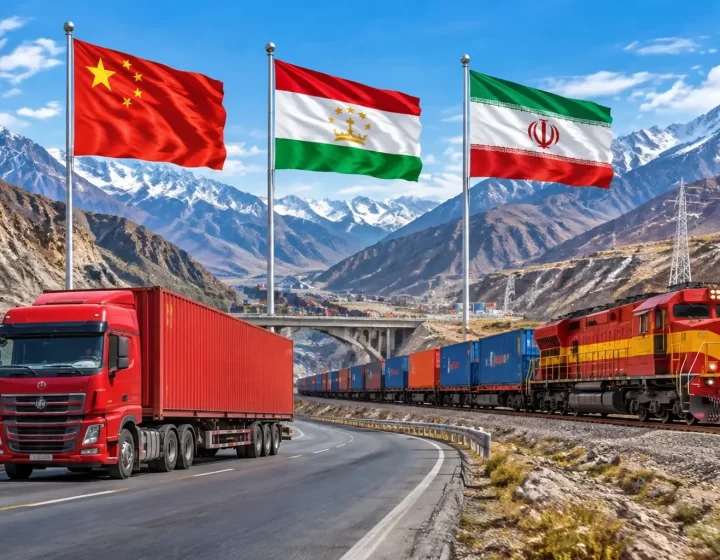
Iran and Tajikistan can work together to improve links between their road and rail networks through dialogue and transport-sector cooperation. Such cooperation matters because the use of transit routes depends on practical arrangements, coordination between railway companies and relevant authorities, and careful review of the regulations in each country along the route.
One example of rail cooperation was reported by Avesta. On 29 May 2025, Tajikistan’s state railway enterprise and Iranian Railways signed a memorandum related to the use of Iranian wagons on Tajikistan’s railway routes.
The report does not specify shipment volumes, tariffs, exact routes or a full implementation timetable. The memorandum can therefore be considered an indication of rail cooperation, but not confirmation of a particular route’s capacity, cost or transit time. For operational decisions, businesses should obtain the latest information from the relevant authorities and railway operators.
Rail Cooperation as Part of Tajikistan Transit Corridor Development
Rail transport may be an option for certain shipments, but its suitability depends on the type of cargo, rail access, loading and unloading facilities, wagon coordination and the regulations of the countries along the route. The memorandum between Iran and Tajikistan highlights the importance of practical coordination. To use Tajikistan transit corridors effectively, the technical and operational details should be confirmed before a shipment is dispatched.
Road, Rail and Freight Transport Planning
The choice between road and rail transport—or a combination of different modes—should be based on the shipment’s specific requirements. Cargo weight and dimensions, sensitivity, loading point, final destination, border conditions and available infrastructure can all affect route planning. No single transport mode is automatically the best choice for every shipment.
Planning for Tajikistan transit corridors should begin before the cargo moves. Shipment details and documents need to be checked against the requirements of the origin, transit and destination countries. It is also important to clarify each party’s responsibilities, agree on how information will be shared and establish a process for tracking the shipment. These steps do not replace official regulatory checks, but they can help reduce uncertainty during transport coordination.
What to Check Before Choosing a Route
- Cargo details: Record the commodity, weight, dimensions, packaging and any special handling requirements.
- Route and transport mode: Assess road, rail or multimodal options in relation to the shipment’s origin and destination.
- Documents and regulations: Confirm the required documents and customs and transit rules with the relevant authorities.
- Border conditions: Check the status of border crossings and any restrictions close to the planned shipping date, as conditions can change.
- Operational coordination: Clarify the roles of the transport companies, responsibilities, handover points and shipment-tracking process in advance.
- Up-to-date information: Consult the Ministry of Transport of Tajikistan for Tajikistan-related transport information. For information concerning transport in China, visit the Ministry of Transport of China.
Bisan Tarabar’s Place in the Transport Services Chain
When assessing a transport company, it is best to review its published information about services, contact details and project experience directly on its website. You can explore company information on the Bisan Tarabar website. Direct links to individual pages are included below; check that each address is correct before publishing.
- About Bisan Tarabar
- Bisan Tarabar Services
- Contact Bisan Tarabar
- Bisan Tarabar Projects
- Bisan Tarabar Articles
Conclusion
Tajikistan transit corridors are important to the country’s regional trade connections, and cooperation between Iran and Tajikistan could broaden transport options. The rail memorandum reported in May 2025 is one example of the two countries’ interest in practical cooperation involving railway wagons. However, the published report does not provide complete implementation details. Each shipment’s route should therefore be selected after checking the relevant documents, regulations and current operating conditions. Reliable information and accurate company-page links are essential for responsible planning across transit routes.