Table of contents
- What is sea freight?
- Pros and cons of sea freight
- Types of sea freight
- Container types
- FCL or LCL?
- Key ports in Iran
- Sea freight costs
- Calculation examples
- Documents and the bill of lading
- Step-by-step sea freight process
- The role of Incoterms in sea freight
- Common mistakes in sea freight
- Frequently asked questions about sea freight
- Conclusion
What is sea freight?
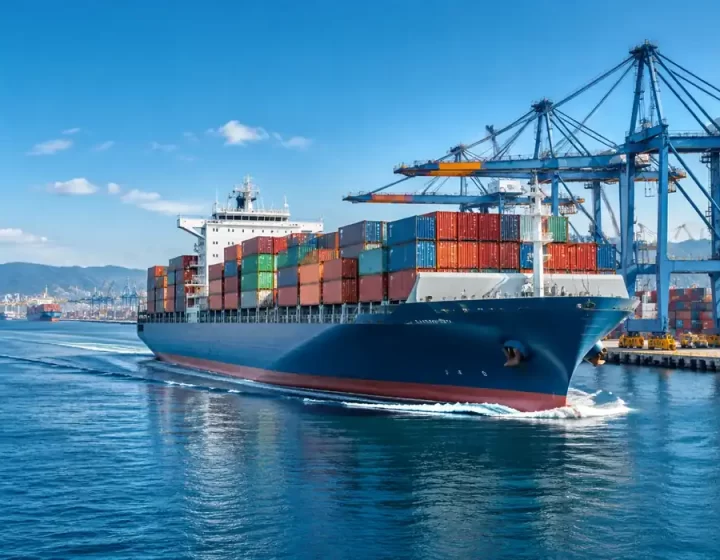
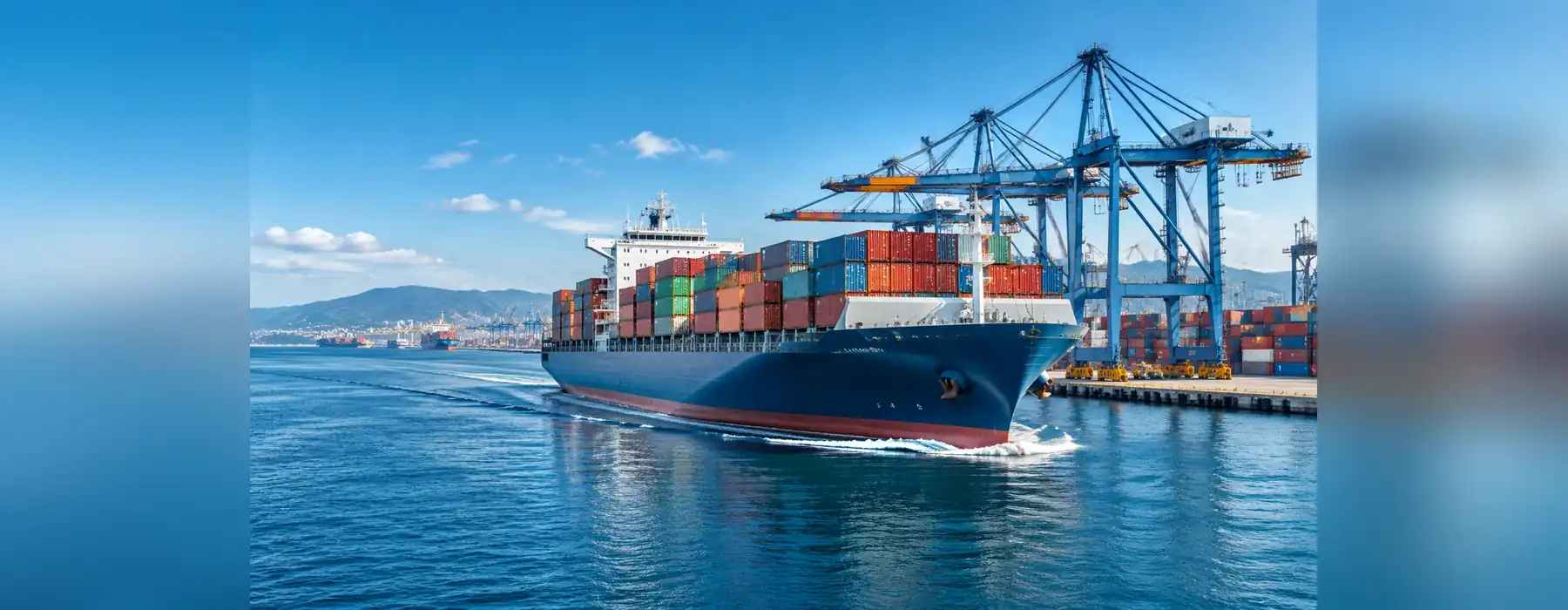
Sea freight is the transport of goods by ship between ports in different countries. A large share of world trade moves this way because ships can carry enormous volumes at a lower cost than other modes. For importers and exporters in Iran, sea freight is the main link to East Asia, India, the Gulf and Europe.
The process is simple in outline: goods are loaded at the origin port, carried by a shipping line to the destination port, unloaded, cleared through customs and then delivered to their final destination. Sea freight, also called ocean freight, is usually slower than air, but for heavy, bulky and non-urgent cargo it is almost always the most economical choice.
Pros and cons of sea freight
Advantages
- Low cost per unit of weight or volume, especially for large shipments
- Very high capacity, from a single small container to bulk carriers
- Flexibility in cargo type: containers, bulk, liquids, machinery and oversized goods
- Global coverage: nearly every major port in the world is connected
- Well suited to very long distances
Disadvantages
- Longer transit times than air and sometimes road
- Dependence on vessel schedules, weather and port congestion
- Need for inland transport to reach the final door
- Rate swings and surcharges in peak seasons or during disruptions
- More complex documents and clearance
Types of sea freight
Container shipping
The most common form of sea freight for general cargo. Goods are packed into standard containers, which improves security and simplifies handling. It comes in two modes, FCL and LCL, explained below.
Bulk shipping
For unpackaged cargo such as grain, ore, coal and loose cement. These goods travel on bulk carriers, usually in very large quantities.
Breakbulk
For cargo that does not fit in a standard container or is extremely heavy, such as industrial machinery, steel structures and project equipment.
Ro-Ro (roll-on/roll-off)
For wheeled cargo like cars and vehicles, which are driven on and off the vessel.
Liquids and special cargo
Tankers carry petroleum and chemical products, and special containers such as reefers (refrigerated) and ISO tanks handle temperature-sensitive and liquid goods. Dangerous goods are governed by specific international regulations and must be arranged with your forwarder in advance.
Container types
| Type | Use and approximate capacity |
|---|---|
| 20 ft container | About 33 m³; suited to heavier cargo |
| 40 ft container | About 67 m³; suited to lighter, bulkier cargo |
| 40 ft high cube (HC) | About 76 m³; extra height for tall cargo |
| Reefer | Temperature control for food, pharmaceuticals and perishables |
| Open top and flat rack | For out-of-gauge cargo or top loading |
| ISO tank | For liquids and chemicals |
Note: Capacities are approximate and vary by container model and shipping line. Ask your forwarder for the maximum payload as well.
FCL or LCL?
- FCL (Full Container Load): the whole container is yours. It suits larger shipments and is faster and safer.
- LCL (Less than Container Load): container space is shared among several shippers. It is cheaper for small shipments, but consolidation and deconsolidation add time, and extra handling raises the risk of damage.
Rule of thumb: if your cargo is somewhere between half and two-thirds of a 20 ft container, get an FCL quote as well. It may turn out cheaper than LCL. Find the exact break-even point by comparing itemized quotes. Ask our specialists to help you choose between FCL and LCL.
Key ports in Iran
- Bandar Abbas (Shahid Rajaee): the country’s largest container port and the main gateway for sea trade
- Imam Khomeini Port: in the northern Persian Gulf, important for general cargo and bulk
- Chabahar: an ocean port in the south-east
- Khorramshahr and northern Gulf ports: links to Iraq and neighboring countries
- Caspian ports (such as Anzali and Astara): for trade with Russia and other Caspian states
For official information on Iranian ports, follow the Ports and Maritime Organization. International maritime standards are available from the International Maritime Organization (IMO).
Sea freight costs
The cost of sea freight is built from these components:
- Ocean freight: the main charge, based on container or volume/weight
- Origin and destination port charges: such as THC (terminal handling charge)
- Surcharges: fuel (BAF), peak season, congestion or route risk
- Bill of lading and documentation fees
- Cargo insurance
- Customs clearance and duties
- Inland transport: from the warehouse to the port and from the port to the destination
- Forwarder’s service fee
Price drivers include origin and destination, container type and size, cargo type, shipping line, season, market volatility and Incoterms. To check reference rates, you can look at SeaRates; treat them as a guide only and get the final price from your forwarder.
Hidden costs to ask about
- Demurrage: a penalty when a container stays in the port beyond the free time
- Detention: a penalty when a container is held outside the port beyond the free time
- Port storage charges
- Inspection or testing fees
- Fees for correcting a bill of lading or documents
Calculation examples
Note: The numbers below are hypothetical and only illustrate the method.
Example 1: Calculating volume (CBM) for LCL
Suppose you have 10 cartons, each measuring 0.8 × 0.6 × 0.5 m:
Volume per carton = 0.8 × 0.6 × 0.5 = 0.24 m³
Total volume = 10 × 0.24 = 2.4 m³ (CBM)
LCL usually follows the W/M rule: you pay on whichever is greater, volume in cubic meters or weight in tonnes. If the total weight is 4 tonnes, the chargeable basis is 4, not 2.4.
Example 2: Comparing LCL and FCL
Say you have 12 m³ of goods. LCL costs 12 × the per-CBM rate plus consolidation and deconsolidation charges. If that total gets close to the freight rate of a 20 ft container, FCL is normally cheaper as well as faster and safer.
Example 3: The impact of demurrage
A container arrives at the port but the clearance documents are incomplete. If it stays beyond the free time, demurrage is charged daily, and the penalty can eventually exceed a large part of the freight itself. The fix is simple: have your documents ready before the vessel arrives.
For an exact price, fill in the sea freight quote request form.
Documents and the bill of lading
The usual documents for sea freight are:
- Bill of lading (BL): the key document. It is a receipt for the goods, the contract of carriage and, in its original form, a document of title.
- Commercial invoice
- Packing list
- Certificate of origin
- Business card and any import registration or permits
- Cargo insurance policy
- VGM (Verified Gross Mass): a declaration of the container’s verified weight, required before loading under maritime safety rules (SOLAS)
- Special certificates and standards for certain goods
Types of bill of lading
- Original BL: the original must be presented to take delivery of the cargo.
- Telex release: delivery without sending the original, on the shipping line’s electronic instruction.
- Sea waybill: a non-negotiable document that does not require the original for delivery.
The type of bill of lading affects payment and delivery, so agree on it with the seller and your forwarder. You can follow Iranian customs rules on the Iran Customs Administration website and read more in our customs clearance guide.
Step-by-step sea freight process
- Define the cargo and route: type, weight, volume, origin and destination ports.
- Choose FCL or LCL and the container type.
- Agree on the Incoterms rule.
- Collect and compare itemized quotes from several providers.
- Make the booking: confirm the vessel and sailing date.
- Pack the goods, deliver them to the terminal and complete export clearance.
- Loading, bill of lading issue and vessel departure.
- Track the shipment along the way.
- Arrival, discharge and import clearance at the destination port.
- Inland transport and final delivery.
A reliable international transport company coordinates all of these steps. Contact our specialists.
The role of Incoterms in sea freight
Incoterms define where costs and risk pass from seller to buyer. Three rules are used most often for sea freight:
- FOB: the seller is responsible until the goods are loaded on board; the ocean freight is the buyer’s cost.
- CFR: the seller pays the freight to the destination port, but risk passes to the buyer after loading.
- CIF: the same as CFR, except the seller also arranges insurance.
Choosing the wrong Incoterms rule can create hidden costs. The official text is available on the ICC Incoterms page. For containerized cargo, FCA and CPT are sometimes a better fit.
Common mistakes in sea freight
- Comparing only the base freight: ask about port charges and surcharges too.
- Ignoring demurrage and detention free time
- Errors in bill of lading details: corrections cost time and money.
- Declaring the wrong weight (VGM): it can stop the container from being loaded.
- Weak packaging: the vessel’s motion and repeated handling can cause damage.
- No insurance: always insure valuable cargo.
- Wrong tariff code or declared value: fines and delays at clearance.
- Relying on a single shipping line: keep an alternative in mind to reduce risk.
Frequently asked questions about sea freight
1. What is sea freight?
The transport of goods by ship between ports. It is the most economical choice for heavy, bulky and non-urgent cargo.
2. What is the difference between FCL and LCL?
With FCL the whole container is yours, which is faster and safer. With LCL the container is shared, which is cheaper for small shipments but takes longer.
3. What makes up the cost of sea freight?
Ocean freight, port charges and THC, surcharges, documentation fees, insurance, clearance, inland transport and the forwarder’s fee.
4. What is a bill of lading (BL)?
The main sea freight document. It is a receipt for the goods, the contract of carriage and, in its original form, a document of title.
5. What is a telex release?
A way to release cargo without sending the original bill of lading, based on an electronic instruction from the shipping line.
6. What is the difference between demurrage and detention?
Demurrage is a penalty for a container staying in the port beyond the free time. Detention is a penalty for keeping the container outside the port beyond the free time.
7. What is VGM?
A declaration of the container’s verified weight, required before loading under maritime safety rules.
8. How long does sea freight take?
It depends on the route, shipping line and transshipment, from a few weeks to longer. Ask for the exact time when requesting a quote.
9. Will my cargo be insured?
Insurance is not automatic and must be requested. Always insure valuable goods.
10. How do I choose a reliable sea freight company?
Check its operating license, experience on your route, price transparency, written contract, insurance and support. Membership in bodies such as FIATA is also a sign of credibility.
Conclusion
Sea freight is the most economical option for heavy, non-urgent cargo, but success depends on choosing between FCL and LCL correctly, understanding port and hidden charges, getting the bill of lading right and having documents ready for clearance. With the right Incoterms rule and a reliable forwarder, time and cost become far more predictable.
For advice and a price based on your own cargo, visit bisantarabar.com and submit a quote request.