
What Is an International Shipping Company?

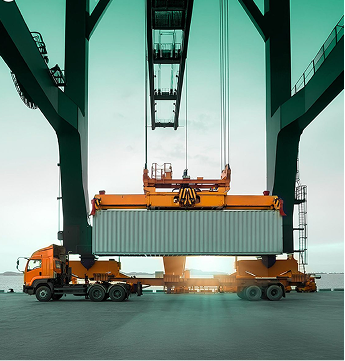
An international shipping company manages the movement of goods between two or more countries, from origin to destination. These companies usually don’t own ships or aircraft themselves. Instead, they work under contract with shipping lines, airlines, trucking fleets and railways, and arrange the best combination of transport for the cargo owner. In the global trade industry, this role is known as a freight forwarder.
If you import or export goods, an international shipping company works like the project manager of your shipment. It coordinates packing, space booking, insurance, documentation, customs clearance and final delivery. Without that coordination, the cargo owner would have to negotiate with dozens of different parties alone.
For example, imagine a manufacturer in Isfahan who wants to send machinery to Turkey. They need to manage truck scheduling, export customs paperwork, cargo insurance and clearance at the destination all at once. An international shipping company handles the whole chain under a single contract.
Services Offered by an International Shipping Company
A professional international shipping company does far more than move cargo. Typical services include:
- Land, sea, air and rail freight, chosen by cargo type and budget
- Customs clearance at origin and destination
- Standard packing and palletizing to prevent damage
- Cargo insurance to cover risks along the route
- Door-to-door delivery, from the seller’s warehouse to the buyer’s warehouse
- Warehousing and distribution for goods that must be stored temporarily
- Shipment tracking and status reports for the cargo owner
- Incoterms and documentation advice to prevent contractual errors
To see how an active provider structures its offering, take a look at the international shipping services at bisantarabar.com.
Types of International Freight
Choosing the transport mode is the most important decision in any project, and it directly affects cost and transit time. An international shipping company typically offers four main modes.
Sea Freight
Sea freight is the cheapest option for heavy, bulky and non-urgent cargo. There are two main modes:
- FCL (Full Container Load): the entire container belongs to one cargo owner.
- LCL (Less than Container Load): container space is shared among several cargo owners.
Example: if you ship 10 tons of raw materials from China to Bandar Abbas, FCL in a 20-foot container is usually cost-effective. But if you only have 3 cubic meters of product samples, LCL costs less. The trade-off is that LCL takes longer because cargo is consolidated and deconsolidated at warehouses. You can explore our sea freight routes here.
Air Freight
Air freight is the fastest option, ideal for perishables, pharmaceuticals, electronics and urgent samples. It costs more and is usually charged by chargeable weight, which is the greater of actual weight and volumetric weight. Companies with IATA accreditation carry extra credibility in this segment. Official information is available on the IATA website.
Road Freight
Road freight is the most flexible mode and matters greatly for Iran’s neighbors such as Turkey, Iraq, Armenia and the Central Asian countries. Its main advantages are door-to-door delivery and predictable schedules. On transit routes, the TIR system lets goods cross borders without repeated inspections; you can read the official explanation on the IRU website.
Rail Freight
Rail sits between sea and air: faster than sea, cheaper than air. It is an attractive choice for long overland routes, such as China to Iran via Central Asia. Many projects also use multimodal transport, for example sea freight to a port followed by rail or road to the final destination. Get advice on the best transport mode for your cargo.
How Is International Shipping Cost Calculated?
One of the most common questions about any international shipping company is, “How much will it cost?” There is no fixed answer, because price depends on several factors:
- Weight and volume: volumetric weight matters in air freight and LCL.
- Origin and destination: distance, border conditions and port conditions.
- Type of goods: dangerous, refrigerated or extra-heavy cargo costs more.
- Transport mode: sea, air, road or rail.
- Incoterms: these determine which part of the journey the seller pays for and which part the buyer pays for.
- Insurance, customs clearance, port charges and warehousing.
- Season and rate fluctuations: rates rise during peak trading seasons.
Volumetric Weight Example
Suppose you have a carton measuring 100 × 60 × 50 cm with an actual weight of 30 kg. In air freight, the following formula is commonly used:
Volumetric weight = (Length × Width × Height) ÷ 6000
So (100 × 60 × 50) ÷ 6000 = 50 kg. Because the volumetric weight (50 kg) is higher than the actual weight (30 kg), you are charged for 50 kg. That is why smart packaging can noticeably reduce your cost. The divisor can vary slightly between airlines, so confirm the exact figure with your carrier.
For an exact price, fill in our international freight quote request form.
Documents Required for International Shipping
Missing or incorrect paperwork is the most common reason cargo is held at customs. An experienced international shipping company helps you prepare and check these documents:
- Commercial invoice
- Packing list
- Bill of lading: BL for sea freight and AWB (air waybill) for air freight
- Certificate of origin
- Business card and import or export permits, where required
- Cargo insurance policy
- HS code, used to calculate import duties
You can follow Iran’s customs rules and procedures on the Islamic Republic of Iran Customs Administration website. More details on clearance are in our customs clearance guide.
The Role of Incoterms
Incoterms are a set of standard rules from the International Chamber of Commerce (ICC) that define the responsibilities and costs of the seller and the buyer. For example, under FOB the seller is responsible until the goods are loaded on the vessel at the port of origin, and from that point the buyer takes over. Under CIF, the seller also pays freight and insurance to the destination port. Choosing the wrong Incoterm can create hidden costs. The official rules are available on the ICC Incoterms page.
How to Choose a Reliable International Shipping Company
The market is full of providers, and choosing purely on “lowest price” often ends up costing more. Check these criteria:
- Credentials and Official Licenses
The company should hold a valid operating license and, ideally, belong to recognized associations such as FIATA for freight forwarders or IATA for air freight. To learn about global standards, visit the FIATA website.
- Experience on Your Route
An international shipping company may be very strong on the China–Iran route and have little experience on routes to Iraq. Ask the company to show examples of similar projects.
- Price Transparency
A quote should itemize all costs: freight, port charges, clearance, insurance and possible extras. A price far below competitors usually hides additional charges.
- Network of Agents and Partners
A company with reliable agents or partners at origin and destination solves cargo problems faster.
- Insurance and Accountability
Ask how claims are handled if cargo is damaged or lost. A written contract and a valid insurance policy are signs of professionalism.
- Support and Tracking
A good international shipping company keeps you updated on cargo status and answers your questions throughout the journey. Contact our specialists to review your needs.
Common Mistakes When Choosing a Shipping Company
- Comparing price only: without comparing services, insurance and transit time, a number alone is misleading.
- Ignoring insurance: if an incident occurs, uninsured damage falls on the cargo owner.
- Misclassifying goods: a wrong HS code or incorrect declaration causes fines and delays.
- Weak packaging: many damage claims come from poor packing.
- No written contract: terms, timing and responsibilities should be in writing.
- Not asking about destination charges: port and warehouse fees at destination may be billed separately.
If you avoid these mistakes, working with an international shipping company becomes a reliable and predictable experience.
Frequently Asked Questions About International Shipping Companies
- What exactly does an international shipping company do?
It plans and executes the movement of goods between countries from origin to destination. Booking space, preparing documents, arranging insurance, customs clearance and final delivery all fall within its scope.
- What is the difference between a freight forwarder and a carrier?
A carrier owns the vehicle, such as a shipping line or an airline. A freight forwarder is an intermediary that works with several carriers and designs the transport solution for the cargo owner.
- What factors affect international shipping costs?
The main factors are weight and volume, distance, type of goods, transport mode, Incoterms, insurance, customs and port charges, and shipping season. For an exact price, you need to provide your shipment details.
- Which transport mode is right for me?
Sea freight suits heavy, non-urgent cargo; air freight suits urgent, lightweight cargo; road freight suits neighboring countries; and rail suits long overland routes. A specialist can recommend the right combination for your budget and timeline.
- What is the difference between FCL and LCL?
With FCL the whole container is yours, and it is faster and safer. With LCL you share container space with others, which is cheaper for small shipments but takes longer.
- What documents are needed for international shipping?
Usually a commercial invoice, packing list, bill of lading, certificate of origin, insurance policy and any permits required for your type of goods. Exact requirements depend on the goods and the destination.
- How can I verify that a company is reputable?
Check its operating license, membership of associations such as FIATA or IATA, track record, project examples, written contract and feedback from previous customers.
- Will my cargo be insured?
Cargo insurance is not automatic or mandatory, so you need to request it. It is strongly recommended for valuable goods. Your contract’s Incoterm also determines which party is responsible for insurance.
- What does door-to-door shipping mean?
The shipping company collects the cargo from the seller’s warehouse and delivers it to the buyer’s warehouse or address, coordinating the steps in between, such as customs clearance.
- How long does delivery take?
It depends on the route and transport mode. Air freight usually takes a few days, road freight to neighboring countries a few days to a few weeks, and sea freight from a few weeks upward. Always ask for the exact transit time when requesting a quote.
Conclusion
Choosing the right international shipping company is not only about price. Licenses, route experience, cost transparency, insurance and support all matter. If you choose the transport mode, documents and Incoterms correctly from the start, delays and hidden costs are kept to a minimum.
For advice and a quote based on your own shipment, visit bisantarabar.com and submit a quote request.